Gemini 2.5 Pro just reset the AI leaderboard — here's what it means for you
TL;DR — Google's Gemini 2.5 Pro with Deep Think reasoning mode dropped on June 22 and immediately took the top spot on every major AI benchmark. GPQA Diamond at 82.4%, MMLU-Pro at 89.8% — numbers no public model had hit before. If you're deciding which AI to use for serious work (or where to put money), this changes the picture.
For the past year, the AI horse race felt predictable. OpenAI dropped something, everyone scrambled to catch up, OpenAI dropped something else. GPT-5.6 is reportedly still coming with a 1.5 million token context window, and everyone assumed it would hold the crown.
Then Google quietly pushed Gemini 2.5 Pro with Deep Think on June 22. It didn't just close the gap — it jumped ahead.
The benchmarks that matter:
| Benchmark | What it tests | Gemini 2.5 Pro | Previous best |
|---|---|---|---|
| GPQA Diamond | Expert-level science Q&A | 82.4% | ~78% |
| MMLU-Pro | Broad academic reasoning | 89.8% | ~87% |
| HumanEval | Code generation | Top tier | GPT-5 range |
These aren't synthetic benchmarks designed to flatter — GPQA Diamond in particular is specifically designed to stump AI systems with questions that even PhD-level humans find hard.
So what does "Deep Think" actually mean?
Deep Think is Google's extended reasoning mode — similar in concept to OpenAI's o3, where the model spends more time "thinking" before answering rather than responding immediately. The difference: Gemini 2.5 Pro's Deep Think appears to be more tightly integrated with its core capabilities rather than bolted on.
Practically, this means better performance on: - Multi-step math and science problems - Complex coding challenges (especially debugging and architecture decisions) - Long-document analysis where context and logic need to chain together
What this means if you're choosing an AI tool right now
For most everyday tasks — writing, summarizing, basic Q&A — the gap between top models is already small enough that it rarely matters. Pick whichever has the best UX for your workflow.
But if your work involves hard reasoning — financial modeling, code review, research synthesis, or technical problem-solving — Gemini 2.5 Pro with Deep Think is now the strongest public option. Claude Opus and GPT-5 are still excellent; this isn't a "switch everything now" moment. It's a "the competition just got sharper" moment, which ultimately benefits everyone using these tools.
What this means if you're watching the AI investment space
Google's stock narrative has been "behind in AI" for two years. Gemini 1.0 underwhelmed. Gemini 1.5 was solid but not exciting. Gemini 2.5 Pro changes the story: Google still has the infrastructure advantage (TPUs, data centers, search distribution), and now it has a model that can actually win benchmarks. That combination is harder to dismiss.
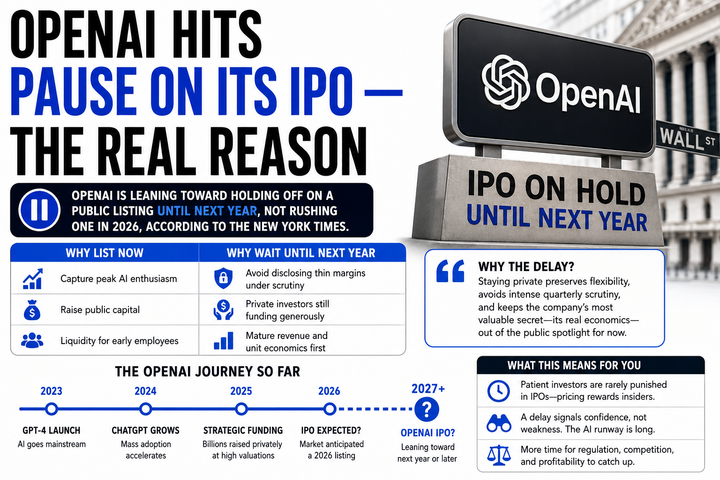
OpenAI's $852 billion valuation and $2.6 billion in monthly revenue show how much money is flowing into this space. But competition from Google — with its ability to integrate AI into Search, Workspace, Android, and Chrome — is a structural threat that matters for how the AI revenue pie gets divided.
Bottom line: The AI race just got a lot more interesting. Google isn't catching up anymore — it's leading, at least for now. Whether that holds when GPT-5.6 drops is the next question worth watching.
Tags: #AI #Google #Gemini #LLMs #TechAnalysis
Sources: buildfastwithai.com (AI News June 22, 2026), AIapps.com (June 2026 AI Breakthroughs), dentro.de/ai (AI News June 2026)
Comments ()