The AI Trade Just Cracked — What the Selloff Means
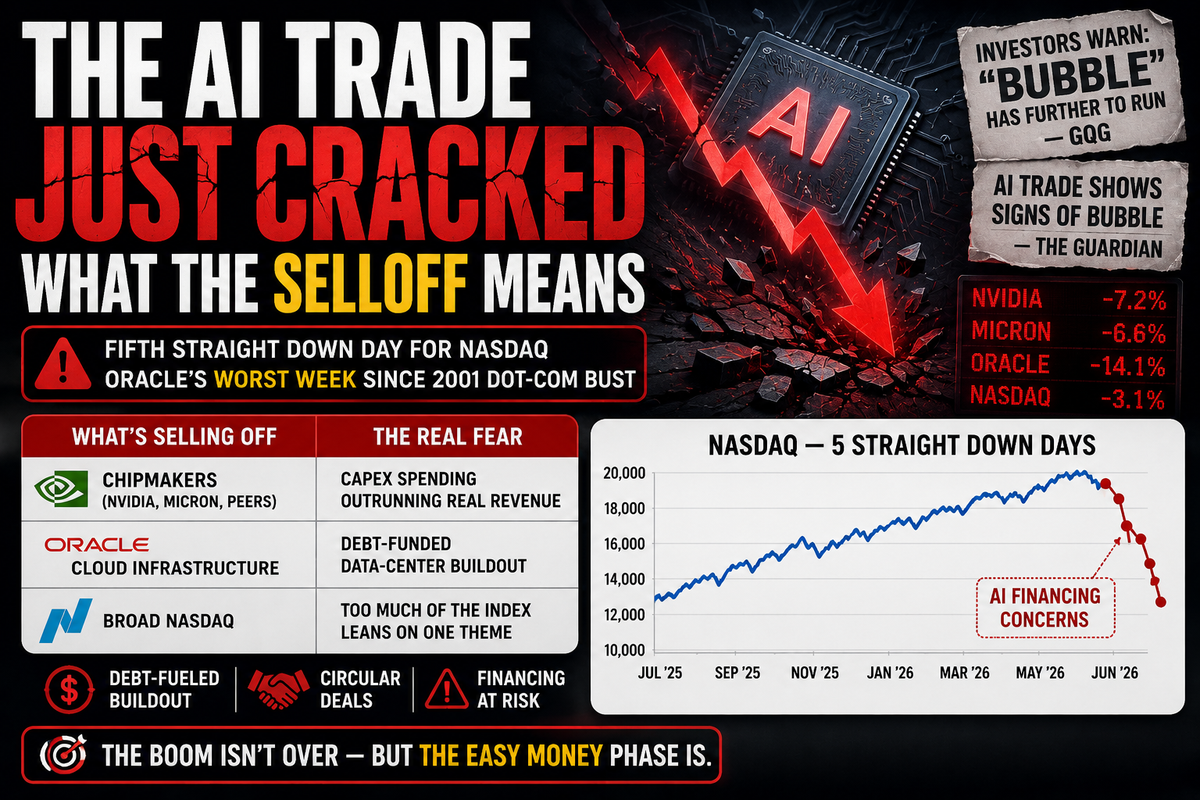
TL;DR — The Nasdaq just logged its fifth straight losing session as chip stocks tumbled, and Oracle had its worst week since the 2001 dot-com bust on fears about how the AI boom is being financed. Big-name investors are openly using the word "bubble." The boom isn't over — but the easy money phase is.
For two years the market has had one trade: buy anything touching AI and hold on. This week that trade broke its rhythm. The Nasdaq Composite slid for a fifth consecutive session as semiconductor names sold off, and the symbolism got hard to ignore when Oracle posted [its worst week since the 2001 dot-com bust](https://www.cnbc.com), driven by concerns about the debt and capital being poured into AI infrastructure. Asset manager GQG and outlets like The Guardian are now saying out loud what fund managers have whispered for months: this looks like a bubble, even if it has further to run.
So what? Two things are happening at once, and it's worth separating them. The first is a valuation problem — many AI-linked stocks are priced for a future that has to arrive on schedule and at full size. The second, newer worry is a financing problem. The buildout of data centers, GPUs, and power is increasingly funded by debt and circular deals, where chipmakers, cloud providers, and AI labs invest in each other. When that plumbing gets scrutinized, the selloff isn't really about whether AI is useful. It's about whether the people building it can keep paying for it.
That distinction matters for your portfolio. A demand bubble pops when customers stop showing up. A financing bubble cracks when lenders get nervous — and that can happen while demand is still growing. It's why a stock like Oracle can fall hard on "AI financing concerns" even as AI adoption keeps climbing.
| What's selling off | The real fear |
|---|---|
| Chipmakers (Nvidia, Micron, peers) | Capex spending outrunning real revenue |
| Oracle, cloud infrastructure | Debt-funded data-center buildout |
| Broad Nasdaq | Too much of the index leans on one theme |
For an ordinary investor, the move here isn't to panic-sell or to "buy the dip" reflexively. It's to check concentration. If your index fund is 35% megacap tech and you also own AI single names on top, you don't have a diversified portfolio — you have one big bet wearing three different jerseys. A pullback like this is a free stress test. If a 10% slide in chip stocks ruins your week, you were over-exposed before the news, not because of it.
The bullish counterpoint is real too: AI usage, enterprise spending, and chip demand are all still rising. None of the bubble talk claims the technology is fake. The argument is narrower — that prices and financing got ahead of even a genuinely strong trend. That's the kind of correction that hurts late buyers and rewards anyone with cash and patience.
Bottom line: AI is the real deal and the trade still got over its skis — those two things are allowed to be true at the same time, and this week the market started pricing in the difference.
Comments ()