OpenAI Hits Pause on Its IPO — The Real Reason
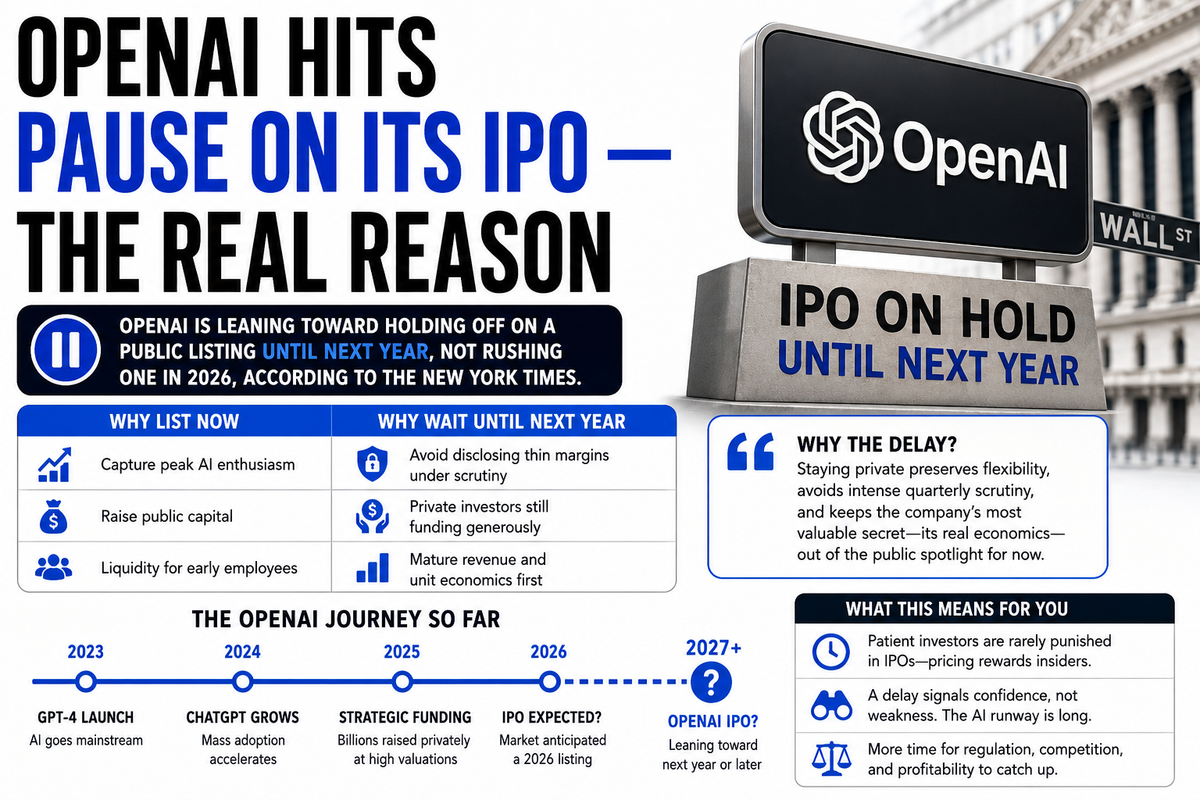
TL;DR — OpenAI is now leaning toward holding off on a public listing until next year rather than rushing one in 2026, according to The New York Times. For the most-watched company in tech, "we'll wait" is itself a strategy — and it tells you a lot about where AI economics actually stand.
The most anticipated IPO in technology just got less urgent. OpenAI is [leaning toward holding up its public offering until next year](https://www.nytimes.com), per reporting from The New York Times — a quiet shift from the assumption that the company would race to the public markets while AI hype was at full volume. There's no drama in the headline. The signal is in the timing.
So what? Companies go public when they need money they can't get privately, or when waiting costs more than listing. OpenAI is in the rare position of being able to raise enormous sums without an IPO — its private backers have deep pockets and obvious strategic reasons to keep funding it. So a delay isn't a sign of weakness. It's a sign that the private money is still flowing freely enough that OpenAI doesn't have to submit to the brutal transparency of public markets just yet.
And that transparency is the real story. A public OpenAI would have to disclose, every quarter, exactly what it costs to run frontier AI: the compute bills, the gross margins, the burn rate. Right now those numbers are the most valuable secret in the industry. Staying private a while longer keeps the rivals — and the skeptics — guessing.
| Why list now | Why wait until next year |
|---|---|
| Capture peak AI enthusiasm | Avoid disclosing thin margins under scrutiny |
| Raise public capital | Private investors still funding generously |
| Liquidity for early employees | Mature revenue and unit economics first |
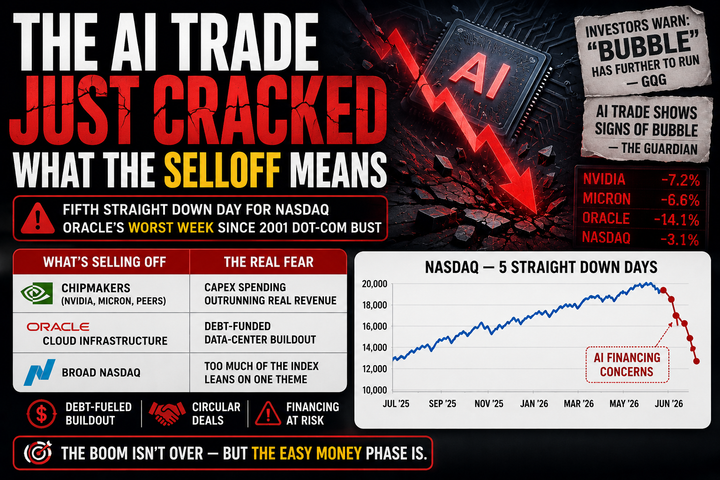
The timing also rhymes with this week's market mood. Chip stocks sold off, Oracle had its worst week since the dot-com bust on AI-financing worries, and "bubble" is back in the financial vocabulary. Walking a richly valued AI company into that market would be a gift to short-sellers. Waiting for calmer, more proven conditions is simply good underwriting.
For the rest of us, there are two takeaways. First, when you eventually can buy OpenAI stock, you'll be buying a company that chose its moment carefully — which usually means the moment favors the seller, not you. IPOs are priced to reward insiders; patience on the buy side is rarely punished. Second, OpenAI's caution is a tell about the whole sector. If the category leader doesn't feel pressure to cash out at peak hype, the smart money clearly thinks the AI story has more runway than the bubble headlines suggest.
The flip side: a delay also buys time for regulation, competition, and the hard question of profitability to catch up. A year is a long time in AI. Whatever OpenAI eventually files will have to show numbers, not vibes — and that's the day the AI economy finally gets graded in public.
Bottom line: When the hottest company in tech can afford to not go public, that's not hesitation — it's leverage, and you should read it as confidence, not cold feet.
Source: The New York Times, June 25, 2026
Comments ()